The Last Trade
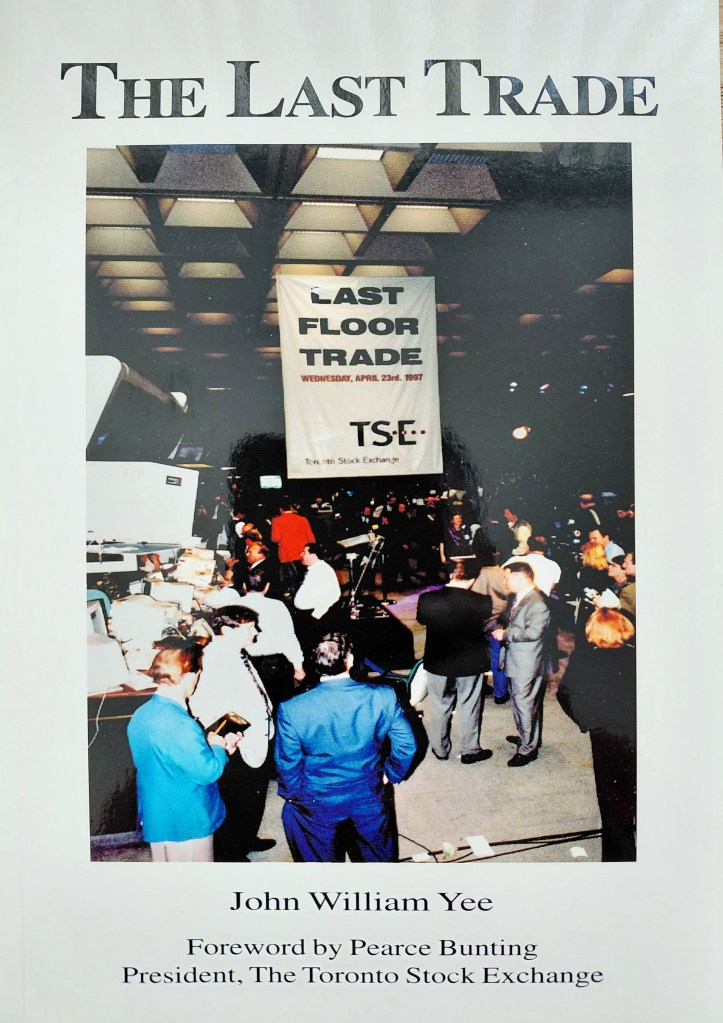
This is an example of ethnographical writing. It was published by Hushion House, Toronto, Ontario 112 pages.
I spent almost everyday for four months among the traders on the floor of the Toronto Stock Exchange before it closed. I decided to write about the event because it was an end of an era. I felt compelled to capture it. Trading became electronic. The New York Stock Exchange is the only face to face trading floor left.
I immersed myself in this group to understand the psychological dimensions. It involves possessing certain moods and attitudes. For example, an important quality that Donny Moss, the oldest trader on The Floor, looked for in people when he was a Head Trader was their attitude. “They may have a great educational background, but if they don’t have the proper attitude, then it’s not worth it. It’s not just for my benefit, but it’s for theirs as well. Having the proper attitude allows them to get by all the slings and arrows and everything else that comes their way.”
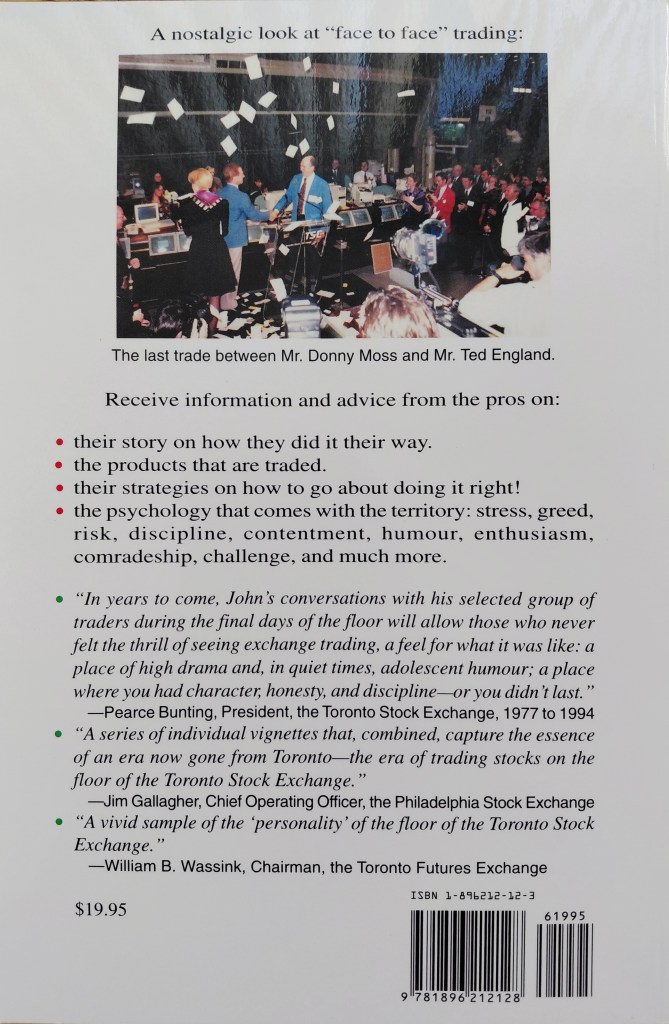
I resorted to fictional as well as nonfictional techniques. I used character sketch and character development. I applied narration to describe how the floor was being dismantled and how it affected the traders as more and more of them were let go in the process. I depended on my interviewing skills as well as observation to collect the data prior to analysis. It also involved knowledge of risk-taking and equity trading so that I could ask the right questions. That was where my psychology and economic backgrounds came in handy. I interviewed three dozen traders on their style of trading and why they do what they do.

 According to John